Customer data and source repositories
 Book a discovery session
Security & Governance
T-Flux brings identity, source permissions, model discipline and evidence-led oversight together in one operating model. Security is not an afterthought; it is part of how the platform is designed to operate.
From data and models to people, records and controls, each part of the AI lifecycle can be governed, reviewed and aligned with enterprise requirements.
Security posture
Customer data and source repositories
Model endpoints, registries, and orchestration policies

User identities, roles, and administrative privileges
Prompt, response, and workflow execution records

Audit evidence, exported reports, and governance artefacts
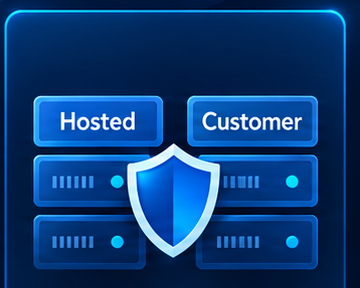
Tenant separation across hosted or customer-controlled environments
Architecture objective
T-Flux applies a private-by-default architecture. The platform is intended to run either inside the customer environment or in a tightly controlled Solveworx-managed hosted deployment, with clear logical separation between tenants, governed access to data sources, and policy controls around model interaction.
The security model should be understood as a set of coordinated control layers rather than a single perimeter control.
Supports Solveworx-hosted, private-cloud, or on-premises deployment. The design favours customer control over infrastructure placement, network boundaries, and data locality.
Users authenticate through controlled enterprise identity paths with MFA and optional SSO. Privileged actions are restricted to authorised administrative roles.
Connector access, source ingestion, document visibility, and retrieval are governed by role and attribute-based rules, trust labels, and data lifecycle settings.
Model orchestration, guardrails, policy checks, citation requirements, and evidence trails help ensure outputs remain explainable and controllable.
These controls should be described on the page as the minimum architecture expected for enterprise deployment.
Security across the AI lifecycle
The architecture should make clear that control is applied from initial source onboarding through to final response generation.
Source systems are connected through governed connectors. Access boundaries, sync rules, and permitted repositories are defined before content enters the platform.
Documents are parsed, classified, indexed, and tagged with metadata, trust labels, and visibility constraints so retrieval does not bypass enterprise policy.
Prompts are routed through approved models and orchestration logic. Guardrails, response constraints, and evidence requirements shape output behaviour.
All critical events can be surfaced through governance and operational views, allowing drill-down into policy decisions, citations, model activity, and workflow records.
Security architecture and governance architecture are intentionally linked within T-Flux.
Policy controls
The platform is intended to support policy-driven operation rather than ad hoc access. This includes who can connect data, who can publish models, which models can be used in production, which sources are trusted, and when a response must provide evidence or refuse to answer.
Evidence controls
Governance should not stop at access control. T-Flux is structured to provide operational and compliance evidence through audit logs, source traceability, model activity reporting, and exportable evidence packs for internal review or supervisory assurance.
T-Flux uses a layered enterprise security architecture that combines private deployment, tenant isolation, strong identity and access control, ACL-aware data governance, controlled model registration, response guardrails, and full auditability. The objective is to allow organisations to deploy and scale AI within a controlled environment where data, models, permissions, and evidence remain subject to enterprise policy.